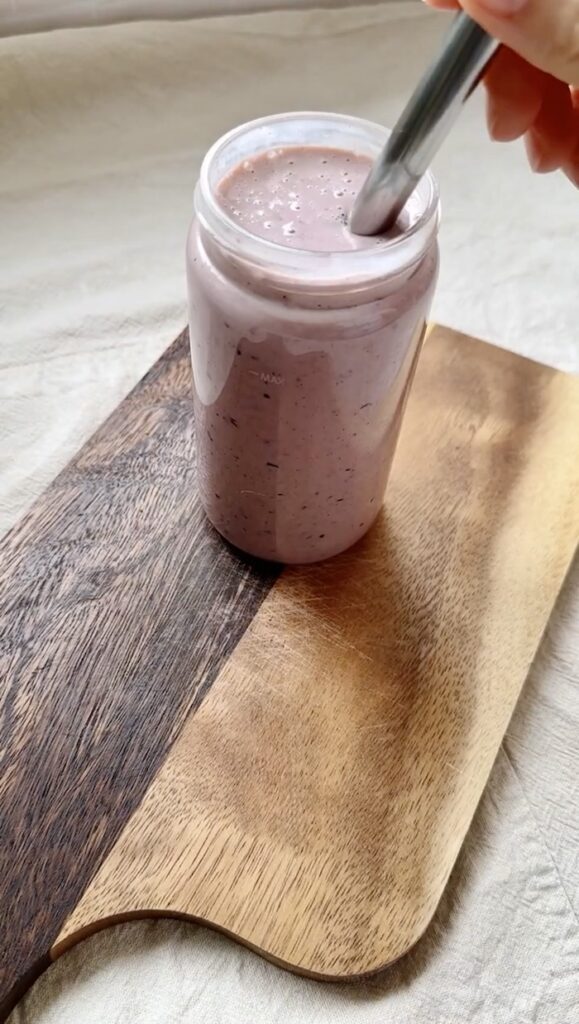
Why You'll Love This Smoothie
There are plenty of reasons to love this blueberry, strawberry, banana and wheatgrass kefir smoothie.
- Quick and easy: It takes only a few minutes to prepare in a blender.
- Naturally sweet: Ripe banana and berries provide sweetness without the need for added sugar.
- Creamy and refreshing: Kefir gives the smoothie a smooth texture and a pleasantly tangy flavour.
- An extra green ingredient: Wheatgrass powder adds a distinctive green colour and a variety of plant compounds.
- Rich in fruit nutrients: Blueberries and strawberries provide vitamin C, fibre and beneficial plant compounds.
- A source of protein: Kefir contributes protein, with the amount depending on the product you choose.
- Contains live cultures: Many kefir products contain live microorganisms, although this varies by product.
- Easy to customise: Add oats, chia seeds, ground flaxseed or protein powder to suit your preferences.
- Perfect for a balanced lifestyle: It is a simple way to combine fruit, a fermented dairy product and a green plant ingredient in one recipe.
Ingredients for Blueberry, Strawberry, Banana and Wheatgrass Kefir Smoothie
This recipe uses five simple ingredients. You can use fresh or frozen fruit depending on what you have available.
Ingredients
- 150–200 ml plain kefir
- 1 ripe banana
- ½ cup blueberries, fresh or frozen
- ½ cup strawberries, fresh or frozen
- 1 teaspoon wheatgrass powder
Adjust the amount of kefir to achieve your preferred consistency. If you are new to wheatgrass powder, you may prefer to start with a smaller amount and gradually increase it according to the product instructions and your personal preference.
Kefir
Kefir is the creamy base of this smoothie. It is a fermented drink, traditionally made using milk and kefir cultures, with a consistency similar to drinkable yoghurt.
Kefir provides protein and calcium, as well as other nutrients that vary according to the product. Many varieties also contain live cultures, making kefir a popular ingredient for people who enjoy incorporating fermented foods into their diets.
Its naturally tangy flavour balances the sweetness of the fruit and complements the slightly grassy taste of wheatgrass powder.
Plain, unsweetened kefir is a good choice because it allows the natural flavours of the banana and berries to shine without adding unnecessary sweetness.
Blueberries
Blueberries add a deep berry flavour, beautiful colour and a gentle sweetness to the smoothie.
They contain fibre, vitamin C, vitamin K and anthocyanins, which are plant pigments responsible for their characteristic blue-purple colour.
Anthocyanins are part of a larger group of plant compounds called polyphenols. These compounds are studied for their antioxidant activity, although eating blueberries should not be viewed as a treatment for any particular health condition.
Blueberries are also easy to use in smoothies because they blend well with both creamy and liquid ingredients.
Fresh blueberries work beautifully, but frozen blueberries are equally suitable. Frozen berries help make the smoothie colder and thicker without needing to add ice.
Strawberries
Strawberries provide a bright, fresh flavour that balances the deeper taste of blueberries and the sweetness of banana.
They are particularly well known for their vitamin C content, which contributes to normal immune system function and helps protect cells from oxidative stress.
Strawberries also provide fibre, folate and various plant compounds.
Their natural sweetness helps balance the flavour of wheatgrass powder, making them especially useful in a green smoothie that still tastes fruity and refreshing.
You can use fresh strawberries when they are in season or frozen strawberries for convenience.
Banana
Banana gives the smoothie its naturally sweet flavour and creamy consistency.
A ripe banana is ideal because it is softer and sweeter than an underripe one. It also helps balance the tanginess of kefir and the earthy flavour of wheatgrass.
Bananas provide carbohydrates, fibre and potassium. Potassium is an essential mineral that contributes to normal muscle function and the maintenance of normal blood pressure.
For a thicker smoothie, use a frozen banana. Simply peel, slice and freeze a ripe banana in advance so that you always have some ready for smoothies.
Wheatgrass Powder
Wheatgrass is the young green shoot of the common wheat plant, Triticum aestivum. It is harvested before the plant develops mature grain and is commonly sold as fresh juice, dried powder or concentrated products.
Wheatgrass powder is popular in green smoothies because of its vibrant colour and its concentration of plant-derived nutrients.
It has a distinctive grassy, earthy flavour, which is why combining it with naturally sweet fruit is such a useful way to enjoy it.
A teaspoon of wheatgrass powder is a convenient addition to this smoothie, providing a small amount of green plant material without overwhelming the fruity flavour.
What Is Wheatgrass, and Why Is It Used in Smoothies?
Wheatgrass is the young leafy growth of the wheat plant. Unlike mature wheat grain, wheatgrass is harvested during the early growing stage, when the plant is still green.
It is commonly used in wellness drinks, green juices and smoothies. Fresh wheatgrass can be juiced, while dried wheatgrass is often ground into a fine powder that can be mixed into water, yoghurt or blended drinks.
Wheatgrass has attracted attention because it contains chlorophyll, pigments and various plant compounds. Its nutritional composition depends on how it is grown, harvested, processed and prepared.
Wheatgrass powder is also convenient because a small amount can be added to a recipe without needing to prepare fresh greens.
In this smoothie, wheatgrass complements the berries and banana while adding a green element to the recipe.
Nutritional Benefits of Wheatgrass
Wheatgrass is often described as a nutrient-rich green ingredient. However, its nutritional value varies between products, and the amount of nutrients you receive from one teaspoon will depend on the powder's composition and serving size.
Here are some of the main characteristics of wheatgrass.
1. Contains Chlorophyll
Chlorophyll is the green pigment that allows plants to absorb light for photosynthesis.
Wheatgrass contains chlorophyll, which contributes to its intense green colour. Chlorophyll and chlorophyll-related compounds are frequently studied for their biological properties, but evidence does not establish that adding wheatgrass to a smoothie detoxifies the human body or provides special health benefits beyond its nutritional contribution.
Your liver and kidneys already perform essential functions involved in processing and eliminating waste products.
2. Provides Plant Compounds
Wheatgrass contains a variety of plant compounds, including phenolic compounds and flavonoids.
These compounds have been investigated for antioxidant activity in laboratory research. However, findings from laboratory studies do not necessarily translate into proven health benefits in people.
Including wheatgrass as one of several plant ingredients in a varied diet is a reasonable way to enjoy its distinctive flavour and nutritional profile.
3. May Contribute Vitamins and Minerals
Depending on the product, wheatgrass can contain vitamins and minerals such as vitamin C, vitamin E, carotenoids, iron and other micronutrients.
The amounts can vary substantially, particularly between fresh wheatgrass and dried powders. A teaspoon is a relatively small serving, so it should not be assumed to provide substantial amounts of every nutrient.
If you want to know exactly how much a particular product contains, check its nutritional label or the manufacturer's nutritional information.
4. Adds Variety to Your Plant-Based Ingredients
One practical advantage of wheatgrass powder is that it makes it easy to add another green plant ingredient to your routine.
A varied diet containing different fruits, vegetables, whole grains, legumes, nuts and seeds provides a broader range of nutrients than relying heavily on one so-called superfood.
In this recipe, the wheatgrass works alongside the berries and banana rather than replacing other fruit and vegetables.
An Important Note About Wheatgrass and Health Claims
Wheatgrass is sometimes promoted as a detox ingredient, an immune booster or a treatment for various conditions. Strong clinical evidence supporting many of these claims remains limited.
It is best to view wheatgrass as an optional green food ingredient rather than a medicine or a replacement for a balanced diet.
Also, wheatgrass should not automatically be considered gluten-free or safe for everyone simply because it is harvested before the grain develops. If you have coeliac disease or need to avoid gluten, choose a product specifically certified gluten-free and check with your healthcare professional if you are unsure about its suitability.
What Does Wheatgrass Taste Like in a Smoothie?
Wheatgrass has an earthy, grassy flavour that can be quite distinctive when consumed on its own.
Fortunately, this smoothie combines it with ingredients that naturally balance its taste.
Banana provides sweetness and creaminess, strawberries add a bright fruity flavour, and blueberries bring a deeper berry note. Kefir adds a pleasant tanginess that ties the flavours together.
The result is a fruity smoothie with a subtle green, earthy undertone.
If you are new to wheatgrass, start with less than a teaspoon to see how you like the flavour. You can adjust the amount gradually, following the product's serving guidance.
Adding more wheatgrass does not automatically make a smoothie healthier, so there is no need to use a large quantity.
How to Make This Smoothie More Filling
If you would like to turn this smoothie into a more substantial breakfast, there are several simple ingredients you can add.
Add Rolled Oats
One or two tablespoons of rolled oats will add carbohydrates and fibre, making the smoothie thicker and more substantial.
Oats have a mild flavour that works well with berries and banana.
Add Chia Seeds
Chia seeds provide fibre, plant-based omega-3 fatty acid ALA and some protein.
Start with a teaspoon and adjust to your preference. Chia seeds absorb liquid, so the smoothie may thicken if you leave it standing.
Add Ground Flaxseed
Ground flaxseed is another source of fibre and ALA omega-3 fatty acids.
Its mild, nutty flavour complements the fruit without overpowering the wheatgrass.
Add Protein Powder
If you want to increase the protein content, add your preferred protein powder. Vanilla protein powder works particularly well with this combination.
Remember that the protein content will depend on the powder and the amount used.
Add Nut Butter
A spoonful of almond butter or peanut butter adds richness, flavour and unsaturated fats.
Nut butter also makes the smoothie more energy-dense, which can be useful if you want a more substantial breakfast.
Is This a Good Breakfast Smoothie?
This smoothie can be a convenient part of a balanced breakfast.
The fruit supplies carbohydrates, fibre and a variety of micronutrients. Kefir contributes protein and calcium, while wheatgrass adds another plant ingredient.
However, whether the smoothie is filling enough for breakfast depends on your appetite, activity level, serving size and overall nutritional needs.
If you tend to feel hungry soon after drinking fruit smoothies, try adding oats, chia seeds, ground flaxseed or nut butter. You can also enjoy the smoothie alongside eggs, wholegrain toast or another protein-rich food.
A balanced breakfast does not need to be complicated, and there is no need to rely on one particular ingredient to make it nutritious.
A Naturally Sweet Smoothie Without Added Sugar
One of the best things about this recipe is that it does not need added sugar.
A ripe banana contributes sweetness, while the strawberries and blueberries add their own fruity flavour. The kefir provides a slight tanginess, and wheatgrass adds an earthy note that balances the fruit.
Using plain, unsweetened kefir also gives you greater control over the overall sweetness.
If the smoothie tastes too tart, try using a riper banana or slightly sweeter strawberries before reaching for honey or syrup.
Flavour Profile
This blueberry, strawberry, banana and wheatgrass kefir smoothie has a delicious combination of fruity, creamy and slightly tangy flavours.
- Blueberries: Sweet, deep and mildly tart.
- Strawberries: Fresh, bright and fruity.
- Banana: Creamy, soft and naturally sweet.
- Kefir: Tangy, smooth and refreshing.
- Wheatgrass: Earthy, grassy and gently vegetal.
The banana helps soften the sharper flavours of the berries and kefir, while the wheatgrass adds a subtle green note.
For the best balance, I recommend using ripe banana and plain kefir, then adjusting the quantity of wheatgrass to your taste.
Tips for the Best Wheatgrass Smoothie
Start with a small amount of wheatgrass. Its flavour is distinctive, so you may prefer to begin with less than a teaspoon if you have never used it before.
Choose ripe bananas. They provide natural sweetness and make the texture creamier.
Use frozen berries. They help create a thick, refreshing smoothie without ice.
Blend thoroughly. Wheatgrass powder can sometimes form small clumps, so blend until it is evenly distributed.
Use plain kefir. Unsweetened kefir balances the fruit without making the smoothie excessively sweet.
Follow the product instructions. Wheatgrass powders vary, so check the recommended serving size, storage instructions and any allergen information.
Drink soon after blending. This gives you the freshest flavour and best texture.
Easy Variations
Blueberry Banana Wheatgrass Smoothie
Use blueberries and banana with kefir and wheatgrass for a simpler berry flavour.
Strawberry Banana Wheatgrass Smoothie
Use strawberries and banana for a bright, sweet smoothie with a subtle green note.
Berry Protein Smoothie
Add vanilla protein powder to increase the protein content and make the smoothie more suitable as a substantial snack or breakfast.
Berry and Oat Breakfast Smoothie
Blend in a couple of tablespoons of oats for additional fibre and a thicker consistency.
Berry Chia Smoothie
Add chia seeds for extra fibre and plant-based omega-3 fatty acids.
Tropical Wheatgrass Smoothie
Replace some of the berries with mango or pineapple for a tropical flavour. These fruits pair well with banana and help balance wheatgrass's earthy taste.
Creamy Berry Nut Butter Smoothie
Add a small spoonful of almond or peanut butter for a richer texture and a nutty flavour.
Is Wheatgrass Safe for Everyone?
Wheatgrass powder is used as a food ingredient, but it is not suitable for everyone in every circumstance.
- Gluten avoidance: Wheatgrass itself is the young shoot rather than the mature wheat grain, but contamination with wheat grain can occur. Anyone with coeliac disease or a strict need to avoid gluten should choose a suitably certified product and seek professional advice if uncertain.
- Pregnancy and breastfeeding: Safety information for concentrated wheatgrass products is limited. If you are pregnant or breastfeeding, ask a healthcare professional before using concentrated powders or supplements.
- Food safety: Fresh wheatgrass and wheatgrass juice can become contaminated during growing or handling. Choose reputable products and follow the manufacturer's preparation and storage instructions.
- Allergies and sensitivities: Check the product label for ingredients, allergens and cross-contamination information, especially if you have a known wheat or grass allergy.
- Medication or health concerns: If you have a medical condition or take medication and plan to use wheatgrass regularly in concentrated amounts, ask your healthcare professional whether it is appropriate for you.
Wheatgrass is an optional ingredient. You can still enjoy a nutritious berry and kefir smoothie without it.
Nutritional Benefits of This Smoothie
This smoothie combines several ingredients that provide complementary nutrients.
Fibre: Blueberries, strawberries and banana contribute dietary fibre, which supports normal digestive function as part of a balanced diet.
Vitamin C: Strawberries and blueberries provide vitamin C, which contributes to normal immune function and collagen formation.
Potassium: Banana contributes potassium, a mineral needed for normal muscle function and the maintenance of normal blood pressure.
Protein and calcium: Kefir provides protein and calcium, although the exact amounts depend on the product and serving size. Calcium contributes to the maintenance of normal bones and teeth.
Plant compounds: Berries contain anthocyanins and other polyphenols, while wheatgrass contains chlorophyll and other plant compounds.
Live cultures: Many kefir products contain live cultures. The type and quantity vary, so check the packaging if this is important to you.