

If you are looking for a delicious, comforting soup that feels a little special while still being made with simple ingredients, this creamy courgette soup with pan-seared garlic scallops is a wonderful recipe to try. Made with fresh courgettes, cauliflower, white onion, garlic, vegetable stock, and single cream, this soup has a beautifully smooth texture and a delicate, fresh flavour. Topped with golden pan-seared scallops cooked in olive oil, butter, and garlic, it becomes an elegant meal that is perfect for a light lunch or a satisfying dinner.
The beauty of this recipe lies in the combination of simple vegetables and delicate seafood. Courgettes provide a mild, fresh flavour, while cauliflower adds natural creaminess and body to the soup without the need for large amounts of cream. White onion and garlic create an aromatic base, and vegetable stock brings all the ingredients together. A little single cream gives the soup a silky finish, making every spoonful smooth and comforting.
The pan-seared scallops are the highlight of this dish. When cooked correctly, scallops develop a beautiful golden crust on the outside while remaining tender and delicate in the centre. Cooking them in olive oil and butter with garlic adds a wonderful savoury aroma that complements the gentle flavour of the courgette soup. The contrast between the creamy soup and the lightly caramelised scallops makes this dish particularly enjoyable.
This courgette soup is also a lovely way to incorporate more vegetables into your meals. Courgettes and cauliflower provide fibre, vitamins, and minerals, while scallops contribute protein and important nutrients, including vitamin B12 and selenium. The result is a delicious meal that combines vegetables, seafood, and a little cream to create something that feels both comforting and elegant.
Whether you are preparing a special lunch, planning a lighter evening meal, or simply looking for a new way to enjoy courgettes, this creamy courgette soup with garlic scallops is a recipe worth adding to your collection.
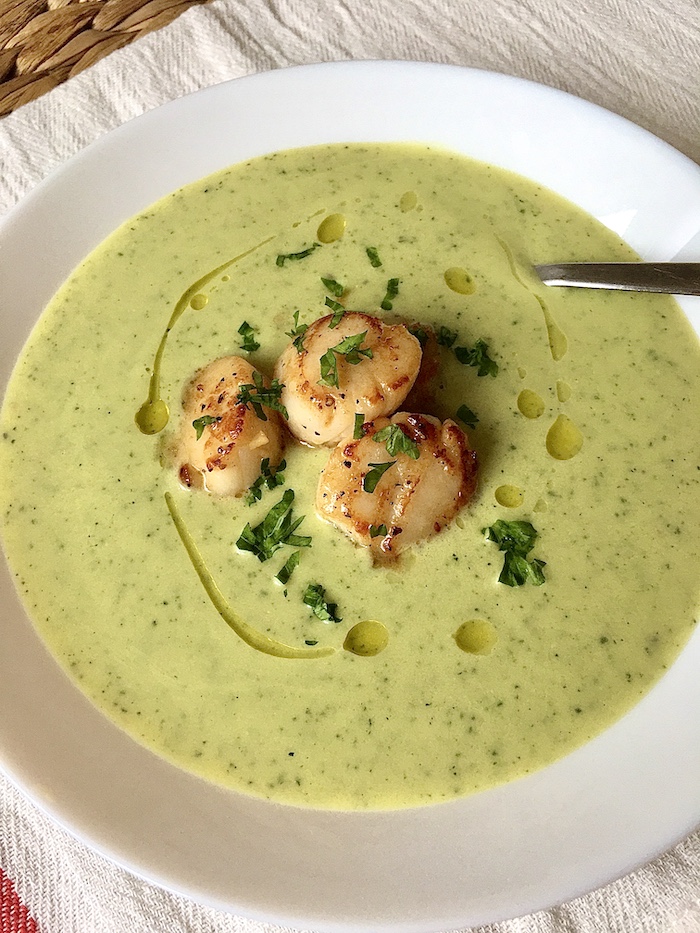

Courgette Soup with Scallops
Description
Why You'll Love This Creamy Courgette Soup with Pan-Seared Scallops
It's creamy and comforting without being too heavy. Courgettes and cauliflower create a naturally smooth, velvety texture when blended together. A little single cream adds richness without overpowering the delicate flavour of the vegetables.
The combination of flavours is delicious. The mild sweetness of courgettes and cauliflower works beautifully with the savoury notes of onion and garlic. The pan-seared scallops bring a delicate sweetness and a golden, buttery finish that makes the soup feel extra special.
It's a wonderful way to eat more vegetables. This recipe uses courgettes, cauliflower, onion, and garlic to create a flavourful vegetable-based meal. Blending the vegetables into a smooth soup is an easy way to enjoy several vegetables in one dish.
The scallops add protein and texture. Tender scallops provide a lovely contrast to the smooth soup. Their naturally sweet flavour complements the vegetables without overwhelming them, while their golden exterior adds another layer of texture.
It's suitable for a light lunch or dinner. Served in a generous bowl, this soup makes a satisfying meal on its own. You can also serve it with a slice of crusty wholegrain bread if you would like something more substantial.
It looks impressive but is surprisingly simple to prepare. The soup is made by simmering vegetables in vegetable stock before blending everything until smooth. The scallops cook quickly in a hot frying pan, so you can prepare an elegant-looking meal without complicated cooking techniques.
It's a lovely recipe for cooler days. A warm bowl of creamy vegetable soup is particularly comforting when the weather is cold. The scallops make this version feel a little more luxurious than an everyday vegetable soup.
What Does Courgette Soup with Garlic Scallops Taste Like?
The flavour of this soup is delicate, creamy, savoury, and slightly sweet, with fresh vegetable notes balanced by the rich, buttery flavour of the scallops.
Courgettes provide the main flavour of the soup. They have a mild, slightly sweet taste that becomes even more delicate when cooked and blended. Rather than dominating the dish, they create a fresh vegetable base that allows the other ingredients to shine.
Cauliflower adds body and natural creaminess. Once cooked and blended, it helps create a thick, velvety consistency without requiring large quantities of dairy. Its subtle flavour works particularly well with courgettes, allowing the soup to remain light and delicate.
White onion contributes gentle sweetness and depth. As it softens in the pan, its sharpness mellows, creating a fragrant base for the soup. Garlic adds a more pronounced savoury aroma, bringing warmth and complexity to the vegetables.
Vegetable stock provides the liquid needed to cook the vegetables and helps bring their flavours together. The single cream is added towards the end of cooking, giving the soup a silky texture and a richer mouthfeel.
The scallops introduce a completely different element. When seared in a hot pan, their natural sugars help create a golden-brown crust with a delicate caramelised flavour. Inside, properly cooked scallops remain tender and slightly sweet.
Butter adds richness, while olive oil helps with the searing process. Garlic infuses the cooking fat with a fragrant, savoury flavour that complements the scallops beautifully.
The result is a lovely contrast between the smooth, mild soup and the golden, tender seafood. Every spoonful combines creamy vegetables with the delicate sweetness of scallops and the aroma of garlic butter.
Ingredients for Creamy Courgette Soup with Pan-Seared Garlic Scallops
This recipe uses simple ingredients to create a smooth vegetable soup topped with beautifully seared scallops. The quantities below make approximately two generous portions.
Courgettes are the main ingredient in this soup, providing a fresh, mild flavour and a soft texture once cooked.
They contain a high proportion of water, which helps create a light soup that does not feel too dense. When simmered until tender and blended, courgettes contribute to a smooth consistency that works particularly well with cauliflower and cream.
Courgettes also provide vitamin C, potassium, and some dietary fibre. They are a versatile vegetable that can be incorporated into soups, salads, pasta dishes, and many other home-cooked meals.
Choose firm courgettes with smooth skin. There is no need to peel them before cooking, as the skin becomes soft during simmering and blends into the soup.
Simply wash the courgettes, trim off the ends, and cut them into roughly equal-sized pieces so that they cook evenly.
Cauliflower is an excellent addition to courgette soup because it helps create a naturally creamy texture.
Once cooked, cauliflower becomes soft and blends easily into a smooth, velvety mixture. Its mild flavour complements the courgettes without making the soup taste too strongly of any single vegetable.
Cauliflower provides vitamin C, folate, and dietary fibre. Including it in this recipe also adds variety to the vegetables in your meal.
Fresh or frozen cauliflower florets can be used. If using fresh cauliflower, cut it into relatively small florets so that it cooks at a similar rate to the courgettes.
The cauliflower is particularly important for the consistency of this soup. It helps create a satisfying texture without needing to rely entirely on cream or other thickening ingredients.
White onion creates the aromatic foundation of the soup.
When gently cooked, the onion softens and develops a mild sweetness that balances the fresh flavour of the courgettes. It also adds depth to the soup, ensuring that the finished dish tastes flavourful rather than bland.
Finely chop the onion so that it cooks evenly and becomes tender before the stock is added.
There is no need to brown the onion deeply. Cooking it gently until soft is enough to develop its flavour while keeping the overall taste of the soup delicate.
Garlic adds a fragrant, savoury flavour that complements both the vegetables and the scallops.
For the soup, finely chop or crush two garlic cloves and add them to the softened onion. Cooking the garlic briefly before adding the vegetables helps release its aroma and distribute its flavour throughout the soup.
Fresh garlic is particularly suitable for this recipe because it provides depth without requiring a large number of additional seasonings.
You will also need one additional garlic clove for cooking the scallops, which gives the butter and olive oil a delicious aroma.
Vegetable stock provides the liquid needed to simmer the courgettes and cauliflower until tender.
It also adds savoury flavour and helps bring the vegetables together. A good-quality vegetable stock works particularly well because it complements the mild vegetables without overpowering them.
You can use homemade vegetable stock or stock prepared from a cube or concentrated stock paste.
If your stock is already salty, be careful when adding extra salt to the soup. It is always best to taste the blended soup before adjusting the seasoning.
The amount of stock determines the final consistency. Using approximately 700 ml should produce a smooth, spoonable soup, but you can add a little extra stock if you prefer a thinner texture.
Single cream gives the soup a smooth, silky finish and adds a gentle richness that makes it particularly comforting.
Because the courgettes and cauliflower already create a creamy texture when blended, you do not need a large quantity of cream.
Add the cream towards the end of cooking, once the vegetables have been blended. Warm the soup gently after adding it rather than allowing it to boil vigorously.
You can adjust the quantity slightly depending on how rich you would like the finished soup to be.
Salt and black pepper help bring out the natural flavours of the vegetables.
Start with a small amount of salt, particularly if you are using prepared vegetable stock. Once the soup has been blended and the cream has been added, taste it and adjust the seasoning as needed.
Freshly ground black pepper adds a gentle warmth that complements the garlic and the delicate sweetness of the courgettes.
Avoid adding too much pepper, as the aim is to preserve the subtle flavour of the vegetables and scallops.
Scallops are the finishing touch that transforms this simple vegetable soup into something a little more special.
They have a naturally sweet, delicate flavour and a tender texture when cooked correctly. Their flavour works particularly well with courgettes and cauliflower because they complement rather than overpower the mild vegetables.
Scallops also provide high-quality protein and nutrients such as vitamin B12, selenium, and phosphorus.
Fresh or properly thawed frozen scallops can be used. If using frozen scallops, defrost them safely according to the packaging instructions and drain them well before cooking.
For the best sear, pat the scallops thoroughly dry with kitchen paper before placing them in the frying pan. Excess moisture can prevent them from developing a golden crust.
If the scallops have a small tough side muscle attached, remove it before cooking.
Olive oil helps the scallops sear in the pan and contributes a subtle fruity flavour.
Using a small amount of olive oil alongside butter allows you to develop a golden crust while adding richness to the finished scallops.
Heat the oil before adding the scallops so that they begin searing as soon as they touch the pan.
Butter adds richness and helps create a delicious finishing sauce for the scallops.
Once the scallops have developed a golden crust, adding butter to the pan creates a rich, aromatic cooking fat that can be spooned over the seafood.
The butter complements the natural sweetness of the scallops and gives them a lovely glossy finish.
You can use unsalted butter if you prefer greater control over the seasoning.
Fresh garlic gives the scallops a wonderful aroma and adds savoury depth to the butter.
It is best to add the garlic after the scallops have started to sear, as finely chopped garlic can burn if exposed to high heat for too long.
Allow the garlic to cook briefly in the butter, stirring or spooning the fragrant butter over the scallops.
The aim is to infuse the butter with garlic flavour without allowing the garlic to become dark or bitter.
Tips for Making the Best Courgette Soup with Garlic Scallops
Cook the onion gently. Allow the onion to soften before adding the garlic. This helps create a sweet, aromatic base without introducing any bitterness from browned or burnt ingredients.
Cut the vegetables into similar-sized pieces. Roughly equal-sized courgette chunks and cauliflower florets cook more evenly, making it easier to achieve a smooth soup.
Cook the vegetables until completely tender. The smoother the vegetables become during cooking, the easier they are to blend into a velvety soup. Check the cauliflower carefully, as it can take slightly longer to soften than the courgettes.
Blend thoroughly. Take your time when blending the soup. A few additional seconds of blending can make a noticeable difference to the final texture.
Add the cream at the end. Stirring the single cream into the blended soup towards the end of cooking helps preserve its smooth texture and delicate flavour.
Adjust the consistency to your preference. If you like thick soup, use the suggested amount of stock. For a lighter, thinner soup, add a little extra vegetable stock after blending.
Dry the scallops thoroughly. This is one of the most important tips for achieving a golden crust. If the scallops are wet, they are more likely to release moisture into the pan instead of searing properly.
Make sure the pan is hot before adding the scallops. A properly heated pan encourages browning and helps prevent the scallops from sticking.
Avoid overcrowding the pan. Scallops need space to sear. If too many are added at once, the temperature of the pan can drop, making it harder to achieve a golden crust.
Add the garlic towards the end. Garlic burns more quickly than scallops cook, so adding it after turning the scallops helps prevent it from becoming bitter.
Cook the scallops just before serving. The soup can be prepared in advance, but scallops are best served immediately after cooking, when their exterior is golden and their centre remains tender.
What to Serve with Courgette Soup and Pan-Seared Scallops
This soup can be served on its own as a light lunch or dinner, but there are several accompaniments that work particularly well if you would like to make the meal more substantial.
Crusty wholegrain bread: A slice of warm, crusty wholegrain bread is an excellent accompaniment. Its firm texture contrasts with the smooth soup, and the bread is perfect for soaking up any remaining garlic butter.
Toasted sourdough: Sourdough provides a slightly tangy flavour and a crisp texture that complements the delicate sweetness of the scallops. Lightly toasted sourdough is particularly enjoyable alongside a bowl of creamy soup.
Rye bread: Rye bread has a slightly earthy flavour that works well with the mild vegetables and savoury garlic butter. Choose a wholegrain variety if you would like to include more fibre in your meal.
A fresh green salad: A simple salad made with rocket, cucumber, and a lemon dressing adds freshness and a little contrast to the creamy soup. The light acidity of the dressing works particularly well with the richness of the butter.
Roasted vegetables: If you are serving the soup as part of a larger meal, a small portion of roasted carrots, peppers, or other seasonal vegetables can add extra colour and variety.
Toasted seeds: A small sprinkle of toasted pumpkin or sunflower seeds can provide a little crunch. Add them just before serving so that they retain their texture.
You do not need to serve the soup with lots of additional ingredients. The combination of smooth vegetable soup and pan-seared scallops already creates a delicious meal with a variety of textures and flavours.
Nutritional Benefits of Courgette Soup with Pan-Seared Garlic Scallops
This recipe combines several vegetables with seafood and a moderate amount of cream to create a flavourful meal that offers a variety of nutrients.
Courgettes and cauliflower provide vitamins, minerals, and dietary fibre, while scallops contribute protein and important micronutrients. The cream, olive oil, and butter add richness and help create the smooth texture and satisfying flavour of the dish.
The exact nutritional values will depend on the size of the vegetables, the type of stock and cream used, and the amount of olive oil and butter that ends up in each serving.
Courgettes: A light and versatile vegetable
Courgettes are a useful ingredient for everyday cooking because they have a mild flavour and can be prepared in many different ways.
They contain water, dietary fibre, vitamin C, and potassium. Their high water content helps create a light soup, while their soft texture makes them particularly suitable for blending.
Courgettes also allow you to create a generous volume of soup without relying on large amounts of cream or other rich ingredients.
Including courgettes in soups, salads, pasta dishes, and vegetable bowls is an easy way to add variety to your meals.
Cauliflower: Fibre and vitamins
Cauliflower is particularly useful in creamy soups because it becomes soft and smooth when cooked.
It provides vitamin C, folate, and dietary fibre, helping contribute to the nutritional variety of the meal.
Cauliflower also contains naturally occurring plant compounds, including glucosinolates, which are found in several vegetables belonging to the brassica family.
In this recipe, cauliflower helps thicken the soup naturally and creates a satisfying texture that works beautifully with courgettes.
Scallops: A source of protein and vitamin B12
Scallops provide high-quality protein, which is needed for the growth and repair of body tissues and the maintenance of normal muscle function.
They also provide vitamin B12, which contributes to normal red blood cell formation and the normal functioning of the nervous system.
In addition, scallops contain selenium, a mineral that contributes to normal thyroid function and helps protect cells from oxidative stress.
Adding scallops to a vegetable-based soup provides a source of protein while bringing a delicate seafood flavour to the dish.
Onion and garlic: Flavour from everyday ingredients
Onion and garlic help create a flavourful soup without requiring a complicated list of ingredients.
Onions contain naturally occurring plant compounds, including flavonoids, while garlic contains sulphur-containing compounds.
Both ingredients contribute aroma and depth, making the soup more satisfying and flavourful.
Cooking them gently before adding the stock helps release their aromas and allows their flavours to blend into the vegetables.
Single cream, olive oil, and butter: Texture and richness
Single cream gives the soup its silky finish, while olive oil and butter help create the golden crust and savoury flavour of the scallops.
These ingredients contribute fat and energy to the meal. Fat also helps the body absorb fat-soluble vitamins from the overall diet.
Although they make the recipe richer, they do not need to be eliminated to enjoy a balanced meal. The quantities can be adjusted according to your preferences and the type of meal you are preparing.
If you prefer a lighter soup, you can reduce the amount of cream slightly. However, keep in mind that the cream contributes to the flavour and texture of the finished dish.
Ingredients
For soup:
Instructions
-
Sauté the onion and garlic for 3 minutes on the pan with olive oil on medium heat, stirring frequently.
-
Add courgette and cauliflower, veggie stock and cook for 20 minutes on medium heat, until veggies are soft.
-
Puree the soup and add single cream, salt and pepper to taste. Simmer for another 2 minutes.
-
Gently fry scallops on medium heat in the pan with olive oil for 1-2 minutes.
-
Flip them, add butter, garlic, lemon juice, salt and pepper and cook for another 1-2 minutes.
-
Serve soup in a bowl and top with scallops.
Nutrition Facts
Servings 2
- Amount Per Serving
- Calories 424kcal
- % Daily Value *
- Total Fat 30.3g47%
- Total Carbohydrate 19g7%
- Protein 20.8g42%
* Percent Daily Values are based on a 2,000 calorie diet. Your daily value may be higher or lower depending on your calorie needs.