
There is something wonderfully comforting about a warm fruit cobbler, especially when it is made with fresh seasonal fruit and a simple homemade topping.
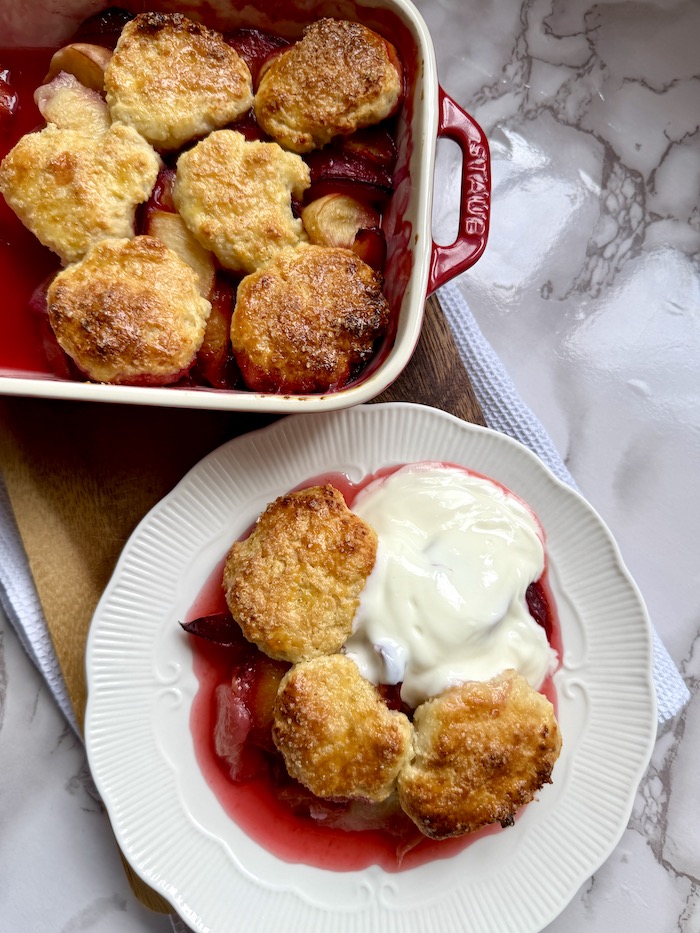
This nectarine and plum cobbler combines juicy nectarines and plums with a lightly sweet cottage-cheese dough topping that becomes beautifully golden in the oven. The fruit softens as it bakes, releasing its natural juices, while the topping develops a lovely golden exterior and a soft, tender centre.
What I particularly love about this recipe is how simple it is. You don’t need a long list of ingredients or complicated baking techniques. The fruit is prepared with just one tablespoon of sugar, while the topping is made with cottage cheese, self-raising flour, sugar and egg white, then brushed with egg yolk before baking.
The result is a rustic, homemade dessert that feels special enough for a weekend treat but is simple enough to make whenever you have some ripe nectarines and plums waiting in the fruit bowl.

Nectarine and Plum Cobbler with Cottage Cheese Topping
Description
Why You'll Love This Nectarine and Plum Cobbler
There are so many reasons to add this easy fruit cobbler to your recipe collection.
It's simple to make. The recipe uses straightforward ingredients and doesn't require complicated pastry-making techniques.
It uses fresh fruit. Juicy nectarines and plums provide the flavour and natural sweetness of the filling.
The fruit and topping work beautifully together. Soft, warm fruit contrasts with the tender baked dough.
The cottage cheese adds a lovely texture. Once incorporated into the dough, cottage cheese helps create a soft and tender topping.
It's lightly sweet. Only one tablespoon of sugar is added to the fruit, while two tablespoons are used in the topping.
It's wonderfully rustic. Cobbler doesn't need to look perfect. Uneven pieces of dough and bubbling fruit are part of its charm.
It's delicious warm or chilled. Serve it warm from the oven or allow it to cool for a softer, more set texture.
What Is a Cobbler?
A cobbler is a classic style of fruit dessert where fruit is baked underneath a topping made from dough, biscuits or a similar mixture.
Unlike a traditional pie, a cobbler doesn't require a pastry crust lining the entire dish. Instead, the fruit sits underneath the topping, allowing its juices to bubble up around the dough as everything bakes.
This makes cobbler particularly approachable for home baking because you don't need to worry about rolling out and shaping pastry.
This version uses a simple cottage cheese dough, which gives the topping a slightly different texture from a traditional biscuit-style cobbler.
Ingredients
You only need a handful of ingredients to make this nectarine and plum cobbler.
Nectarines
Nectarines provide a lovely juicy, sweet and slightly tangy flavour.
Choose ripe nectarines that have a little give when gently pressed. They should be juicy but not so soft that they are difficult to cut.
You can leave the skin on, which is what I recommend for a rustic cobbler. The skin softens during baking and adds colour to the fruit filling.
Cut the nectarines into bite-sized wedges or pieces so that they cook evenly.
Plums
Plums add a beautiful contrast to the nectarines.
Depending on the variety you use, plums can range from sweet to pleasantly tart. This slight acidity is particularly delicious with the sweetness of the baked fruit and dough topping.
As with the nectarines, the plums can be left with their skin on.
Remove the stones and cut the fruit into similar-sized pieces.
Sugar
Only one tablespoon of sugar is added to the fruit.
The amount of sugar you need can depend on how naturally sweet your nectarines and plums are. Riper fruit will generally need less additional sweetness.
The sugar also helps draw out some of the juices from the fruit as it begins to bake.
Cottage Cheese
The dough topping contains 50 g of cottage cheese.
Cottage cheese gives the dough a soft, moist texture and adds a subtle creamy quality.
Once baked, you won't have the same texture as eating cottage cheese on its own. When mixed with the flour and sugar, it becomes part of a soft dough that works beautifully as a cobbler topping.
Self-Raising Flour
100 g of self-raising flour forms the main structure of the topping.
Using self-raising flour keeps the recipe simple because the raising agent is already incorporated into the flour.
It helps the dough become lighter as it bakes, creating a tender topping rather than a dense layer over the fruit.
Sugar
Two tablespoons of sugar are added to the dough.
This gives the topping a gentle sweetness that complements the naturally sweet and slightly tart fruit underneath.
Because the fruit is already sweet, the topping doesn't need to be heavily sweetened.
Egg White
Egg white is incorporated into the dough to help bring the ingredients together.
It contributes structure as the topping bakes and helps create a tender but cohesive dough.
Egg Yolk
The egg yolk is used to brush the top of the dough before baking.
This is a simple but useful step because it helps the topping develop a beautiful golden finish as it bakes.
How to Tell When the Cobbler Is Ready
There are a few signs to look for.
The topping should be golden brown on top.
The dough should look cooked rather than wet or doughy.
The fruit should be soft and juicy, with some of its juices bubbling around the topping.
You can gently check one of the thicker pieces of topping to make sure the centre is cooked through.
Remember that the cobbler will continue to settle slightly as it cools.
The Flavour Profile
This cobbler has a lovely balance of sweet, fruity and slightly tangy flavours.
The nectarines bring juicy sweetness and a gentle floral fruitiness, while the plums add a little more acidity and depth.
The lightly sweetened cottage-cheese topping provides a soft, comforting contrast to the warm fruit.
The golden egg-yolk-brushed surface adds a subtle richness and makes the finished cobbler look beautifully homemade.
The combination is simple rather than overly sweet, allowing the flavour of the fruit to remain the star.
Texture
The texture is one of the best things about this dessert.
The fruit becomes soft, juicy and tender as it bakes, while the topping becomes golden on the outside and soft underneath.
As the fruit cooks, its juices mingle with the bottom of the dough, creating little areas of delicious fruity softness.
At the same time, the exposed parts of the topping become more golden and lightly crisp.
For the best experience, serve it while the fruit is still warm.
Tips for Making the Best Cobbler
Use ripe but not overripe fruit
Ripe nectarines and plums provide the best flavour and natural sweetness.
Avoid fruit that is extremely soft or damaged, as it can release excessive liquid.
Cut the fruit into similar-sized pieces
This helps everything cook more evenly.
Very large pieces may remain firm while smaller pieces become very soft.
Don't overwork the dough
Once the ingredients have come together, stop mixing.
Overworking the dough can result in a heavier topping.
Don't add too much extra flour
The dough may feel slightly soft because of the cottage cheese. Resist the temptation to add a large amount of additional flour.
A soft dough helps produce a more tender topping.
Leave some fruit visible
There's no need to completely cover the fruit.
The exposed nectarines and plums will bubble around the dough pieces and create the characteristic rustic cobbler appearance.
Watch the topping as it bakes
Every oven is slightly different, so keep an eye on the colour.
You want the topping golden and cooked through without allowing it to become too dark.
Serving Suggestions
This nectarine and plum cobbler is delicious on its own, particularly when served warm.
For a more indulgent dessert, you can serve it with:
- Greek yoghurt
- Natural yoghurt
- Vanilla yoghurt
- A scoop of vanilla ice cream
- A little whipped cream
- Crème fraîche
- A drizzle of honey
I particularly like serving warm fruit cobbler with cold Greek yoghurt. The contrast between the warm fruit and cool, creamy yoghurt is delicious.
A little dusting of cinnamon can also be lovely if you enjoy warm spices.
How to Store Nectarine and Plum Cobbler
Allow the cobbler to cool before covering and refrigerating any leftovers.
Store it in the refrigerator in a suitable covered container.
When you're ready to enjoy it again, you can gently reheat individual portions.
The topping may soften slightly after refrigeration, but reheating can help bring back some of the warmth and softness of freshly baked cobbler.
Make-Ahead Option
You can prepare the fruit and topping ahead of time, then assemble and bake when you're ready.
For the best result, I recommend baking the cobbler relatively close to serving time so that the topping retains its freshly baked texture.
If preparing ahead, keep the prepared components refrigerated and bake until the fruit is bubbling and the topping is golden and cooked through.
A Simple Seasonal Dessert
One of the things I love most about fruit cobblers is that they are a wonderful way to make seasonal fruit the centre of a dessert.
You don't need elaborate decorations or complicated pastry.
The fruit provides most of the flavour, while the simple homemade topping adds just enough sweetness and texture to turn it into a comforting dessert.
This makes it a lovely recipe for summer and early autumn, when nectarines and plums are at their best.
Ingredients
For the fruit part:
For the dough part:
Instructions
-
Preheat the oven to 180 C.
-
Ina bowl add fruit and sugar, mix gently. Then transfer into the baking dish.
-
In other bowl add all the ingredients for the dough, mix it until well combined.
-
Divide the dough into small pieces and pun on top of the fruit. Brush with wisked yolk and sprinkle with sugar.
-
Bake for 25-30 minutes, until golden brown and the fruit is soft and bubbly.
-
Let it cool slightly, then serve with Greek yoghurt or ice cream. Enjoy!

Nutrition Facts
Servings 4
- Amount Per Serving
- Calories 250.3kcal
- % Daily Value *
- Total Fat 3.26g6%
- Total Carbohydrate 48.49g17%
- Protein 6.99g14%
* Percent Daily Values are based on a 2,000 calorie diet. Your daily value may be higher or lower depending on your calorie needs.